Porcelain Veneers: Are They the Best Option for Your Smile Makeover?
Wondering if porcelain veneers fit your smile goals? Learn how they work, who's a good candidate, and what the process really involves.
Picture this: you’re scrolling through old photos from a friend’s wedding and you catch yourself avoiding every picture where you’re smiling with teeth showing. Maybe it’s a chipped front tooth from years ago. Maybe it’s a gap that’s bothered you since high school, or teeth that have just gotten duller with time no matter how well you brush. You start wondering if there’s a way to fix all of it at once, instead of chasing each problem separately. This is exactly where porcelain veneers tend to come up in conversation. And honestly, for good reason.
If you’ve been researching smile makeovers, you’ve probably seen porcelain veneers mentioned again and again. They’re popular. But popular doesn’t mean automatic, and it doesn’t mean they’re right for everyone. Let’s walk through what veneers actually do, who tends to benefit from them, and what to think through before you book a consultation.
What Exactly Are Porcelain Veneers?
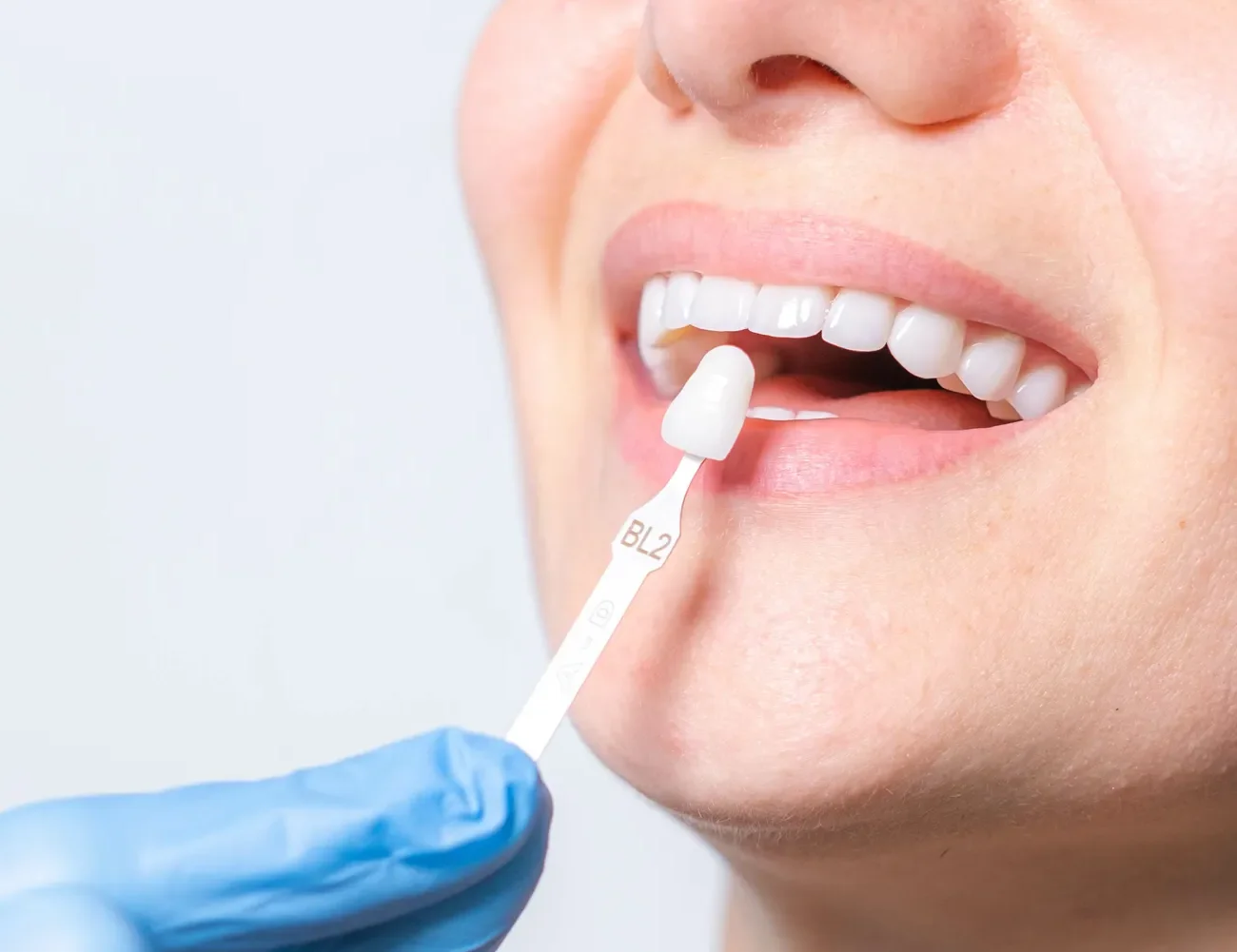
Porcelain veneers are thin shells custom made to cover the front surface of your teeth. Think of them as a new outer layer, bonded directly onto your existing tooth structure. They’re built to handle cosmetic concerns like discoloration, chips, gaps, and minor misalignment, all without braces or more invasive work.
The porcelain is chosen for a specific reason: it mimics the way natural enamel reflects light. That’s part of why veneers tend to look convincing instead of fake, which matters a lot if you want a change but don’t want it screaming “new teeth.”
How Are They Different from Dental Bonding or Crowns?
Dental bonding uses a resin material applied right on the tooth and shaped chairside. Faster. Cheaper. But less durable, and more likely to stain down the road. Crowns cover the whole tooth and usually get reserved for teeth that need real structural backup because of damage or decay. Veneers sit in the middle. More conservative than a crown, tougher and more stain-resistant than bonding.
Who Tends to Be a Good Candidate for Veneers?
Not everyone who walks into a smile makeover consultation walks out with a veneer treatment plan. That’s by design. Veneers work best when your teeth are structurally healthy but you’ve got cosmetic things you’d like to change.
- Teeth that are discolored or stained in a way that doesn’t respond well to whitening
- Minor chips or cracks in the front teeth
- Small gaps between teeth
- Teeth that are slightly misaligned or uneven in shape
- Teeth that appear worn down from age or grinding
If you’ve got active gum disease, significant decay, or a bite issue that needs correcting first, your dentist will likely want to handle that before veneers enter the picture. This isn’t a stall tactic. It’s about making sure the foundation underneath is solid, so the veneers actually hold up the way they’re supposed to.
What Does the Process Actually Involve?
Getting veneers usually takes more than one visit. So it helps to know what’s coming instead of getting surprised halfway through.
The Consultation and Planning Stage
During your first visit, your dentist examines your teeth, talks through what you’d like to change, and figures out whether veneers make sense for you. This is also when shade, shape, and size get discussed, so the end result feels built for your smile, not pulled off a shelf.
Preparing the Teeth
A small amount of enamel, usually less than a millimeter, gets removed from the front of the teeth getting veneers. That step matters. Without it, the veneer can feel bulky or look unnatural once it’s placed. Impressions or digital scans are then taken and sent off to a dental lab, where your veneers get custom made.
Placement
Once your veneers come back, they’re checked for fit and color before getting permanently bonded to your teeth. Any final adjustments happen here, so your bite feels comfortable and natural, not like something foreign just got glued in.
How Long Do Porcelain Veneers Typically Last?
With consistent care, porcelain veneers can last for many years. The exact timeline depends on habits, things like grinding, diet, and how well you keep up with oral hygiene. Don’t use your teeth as a bottle opener. Wear a nightguard if you grind. Keep showing up for your regular checkups. All of it adds up to how long your veneers hold their ground.
Here’s the thing: porcelain itself doesn’t stain the way natural enamel does, which is part of why so many people like veneers for keeping a smile looking consistent year after year. That said, the bonding material around the edges can still pick up some color from coffee, red wine, or tobacco. So a little maintenance awareness still matters.
Are There Downsides to Consider?
Being upfront about the downsides matters just as much as talking up the benefits. Since a small bit of enamel gets removed during prep, the process is considered irreversible. Once you have veneers, you’re committed, you’ll need to maintain them or replace them down the line, since the teeth underneath will always need that covering now.
Veneers also don’t fix what’s underneath. Untreated cavities or bite misalignment don’t just disappear because there’s porcelain on top. If those issues exist, your dentist will likely want to treat them first, or point you toward a different approach entirely. Cost is another piece of the puzzle. Veneers are a cosmetic investment, and that typically means insurance won’t cover it.
How Do You Know If Veneers Are Right for You?
This really comes down to your goals and the condition of your teeth. If you’re mostly chasing cosmetic fixes and your teeth are otherwise healthy, veneers are often worth a real conversation with your dentist. If what’s bothering you is more about alignment or how your bite functions, other treatments might be worth exploring first, or alongside veneers.
The best way to sort this out? An honest conversation with your dental provider, one where you lay out your goals and they walk you through what’s actually realistic for your teeth.
Ready to Get Started?
If you’ve been thinking about a smile makeover and want to know whether porcelain veneers fit your goals, Always There Dental Care is here to help you figure that out. If you’re looking into porcelain veneers in Chicago, you can schedule a consultation with Always There Dental Care and talk through your options with zero pressure attached. Always There Dental Care takes the time to walk through your goals, examine your teeth, and lay out what a realistic outcome actually looks like before any treatment starts. Reach out to Always There Dental Care today to schedule your consultation and take the first real step toward the smile you’ve been picturing.
Frequently Asked Questions
Do porcelain veneers hurt to get?
Most people report mild sensitivity during the enamel prep step, and that’s typically managed with local anesthesia. Afterward, some temporary sensitivity to hot or cold is normal. It usually fades within a few days.
Can veneers be whitened once they’re placed?
No. Porcelain veneers don’t respond to whitening treatments the way natural teeth do. That’s exactly why shade gets picked so carefully before placement, often alongside whitening your natural teeth first so everything matches up.
Will veneers look fake or overly perfect?
When they’re planned and made well, veneers are built to mimic natural tooth translucency and texture. Your dentist works with you on shape and shade so the result looks proportionate to your face, not like a stranger’s smile.
How many teeth typically get veneers in a smile makeover?
Varies person to person. Some only need veneers on the few front teeth that show when they smile. Others go broader, aiming for more uniform results across the whole smile.
Is there an age limit for getting porcelain veneers?
No strict cutoff, but dentists generally wait until your teeth and jaw have fully developed. Veneers are meant for permanent teeth that are done growing, not teeth still finding their place.